The 1911 is one of those pistols that somehow manages to feel both frozen in time and completely alive simultaneously.
More than a hundred years after its introduction, it still sparks arguments at gun counters and turns casual range trips into long conversations. On one hand, some people call it obsolete and outdated. On the other hand, however, others would evidently disagree since 1911s across multiple manufacturers are collectively selling more than they ever have before. In fact, 1911s were and remain some of the most popular semi-automatic pistols ever made.
So regardless of your personal opinion on the 1911, conversations about it never seem to die. And at the center of those conversations is a familiar debate: is a budget 1911 good enough, or do the higher-end examples truly justify their price?
Long story short, looking at real pistols, not marketing promises, makes that answer a lot clearer.
Why the 1911 Still Matters
Plenty of handguns work. But very few inspire loyalty to the degree that the 1911 has.
The 1911 has a way of turning practical shooters into philosophers. Put two people next to each other at a range and hand them two different 1911s, and it will not take long before the conversation drifts away from targets and toward ‘feel’ and ‘soul’ and whether spending more really buys anything that matters.
That question sits at the beating heart of the budget versus higher-end 1911 debate. On paper, they all follow the same blueprint. Steel frame, single-action trigger, big slow bullet.
In the hand and over the course of time, however, the differences start to reveal themselves in ways that spec sheets never quite capture.
What People Really Mean by “Budget” and “High-End”
Before diving deeper, it helps to define terms honestly. In the 1911 world, “budget” honestly does not necessarily mean cheap or disposable. It means built to a price point, and with priorities that are more than often placed firmly on function rather than refinement.
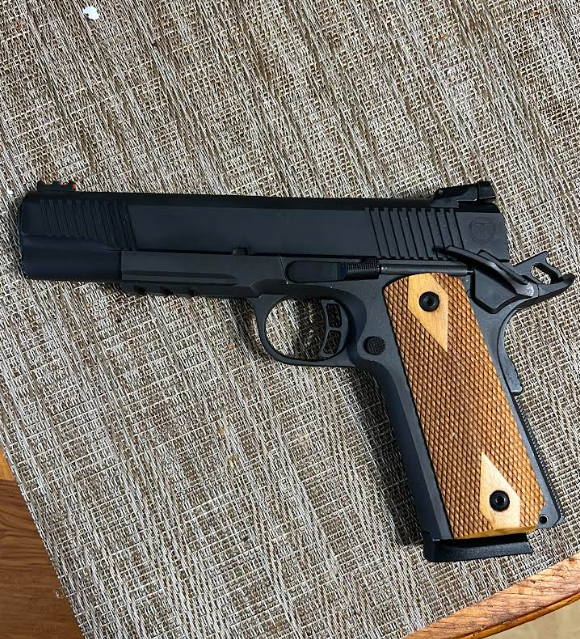
The finish of this Armscor-made Taylor’s 1911 is not as pretty, but it works.
Higher-end 1911s, on the other hand, are not just about performance. They are about consistency of both the finish and in the small details that make the gun feel actually complete rather than merely assembled. That distinction matters more than most people expect.
Fit, Finish, and the First Five Minutes
The first few minutes with a 1911 often set the tone for the entire ownership experience. This is where higher-end pistols tend to separate themselves immediately.
A Colt Series 70 or a Smith and Wesson E-series usually feels cohesive right out of the box. What does this mean? The slide moves smoothly without grit. The controls click with authority. Edges feel intentional rather than rushed. There is a strong sense that all the parts were meant to live together.
A budget 1911 (like the Armscor-made Taylor’s 1911 I’ve had) often tells a different story. The slide may feel looser. The finish may look purely utilitarian and not as polished. Tool marks might exist if someone goes looking for them. None of this necessarily affects function, but it does certainly affect perception.
That initial impression is important because it colors expectations. A refined pistol invites trust immediately. A budget pistol can’t help but ask to prove itself over time.
The Trigger Conversation Everyone Eventually Has
Triggers are where 1911 discussions either become very technical or very emotional. The truth lives somewhere in between.
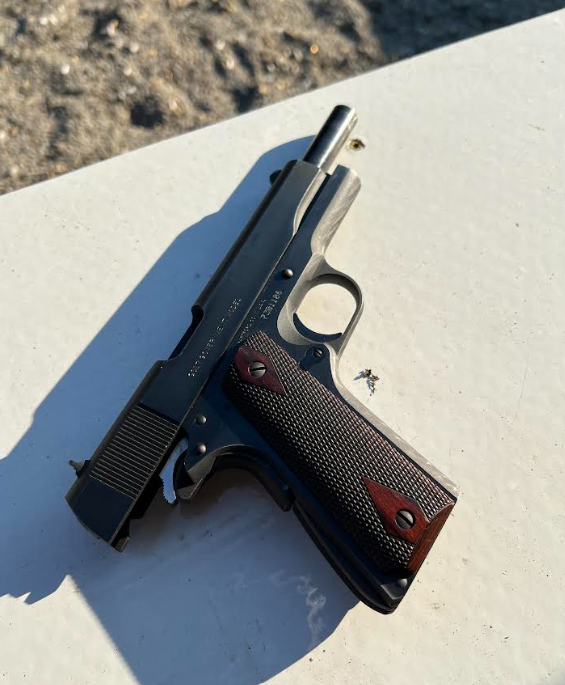
This Colt Mark IV Series 70 is every bit a work of art as it is a defensive arm.
Higher-end 1911s tend to have better triggers out of the box. A Colt Series 70 (my personal favorite 1911) often delivers a clean break with minimal creep, the kind of trigger that makes shooters feel smarter than they actually are. The Smith and Wesson E-series (which my brother favors) may feel slightly more modern or mechanical, but it remains crisp, predictable, and confidence inspiring.
Budget 1911s usually ship with serviceable triggers rather than exceptional ones. The Taylor’s trigger had a little more noticeable creep and a heavier break than my Colt or my brother’s Smith. It is not bad, by any means. It’s just honest. And with time, familiarity, or a little gunsmith attention, it can improve dramatically.
The key difference is expectation. Higher-end guns assume the shooter wants refinement now. Budget guns assume the shooter is willing to meet the pistol halfway.
Accuracy: More Similar Than Different
Here is where the debate often surprises people. In practical terms, most 1911s are more accurate than the people shooting them.
At typical handgun distances, the difference between a budget Taylor’s and a higher-end Colt or Smith and Wesson is often negligible. All three are capable of respectable groups. All three can perform well in defensive or range settings.
The distinction shows up more in consistency. Higher-end pistols tend to group more predictably across different ammunition types and shooting conditions. Budget pistols may produce occasional flyers or show preferences for certain loads.
That does not make the budget gun inaccurate. It simply means that it is less forgiving!
Reliability and the Tolerance Tradeoff
Reliability is where budget and higher-end 1911s sometimes flip expectations.
Budget 1911s are often built with slightly looser tolerances. This can offend purists, but it has a practical upside. Looser guns tend to run dirty, run dry, and run through a wider range of ammunition without complaint.
Higher-end 1911s often rely on tighter fitting parts as a means to achieve smoothness and consistency. When properly maintained, they are extremely reliable. When neglected, they can be less tolerant.
Neither approach is wrong. They simply prioritize different realities. One assumes careful ownership. The other assumes hard use.
Materials, Longevity, and Wear
Over years of ownership, differences begin to appear in how pistols age.
Higher-end 1911s tend to wear gracefully. The finish thins evenly. Controls smooth out. The gun develops character rather than looking tired. A Colt Series 70, in particular, seems to improve with time, as if it was built expecting decades of use!
Budget pistols show wear more plainly. Finish may thin faster. Sharp edges may soften unevenly. Internal parts may benefit from replacement sooner.
Again, this is not a failure. It’s simply the result of different cost priorities during manufacturing.
Pride of Ownership and Emotional Value
This is the part of the discussion that rarely gets admitted out loud, but quietly drives many decisions.
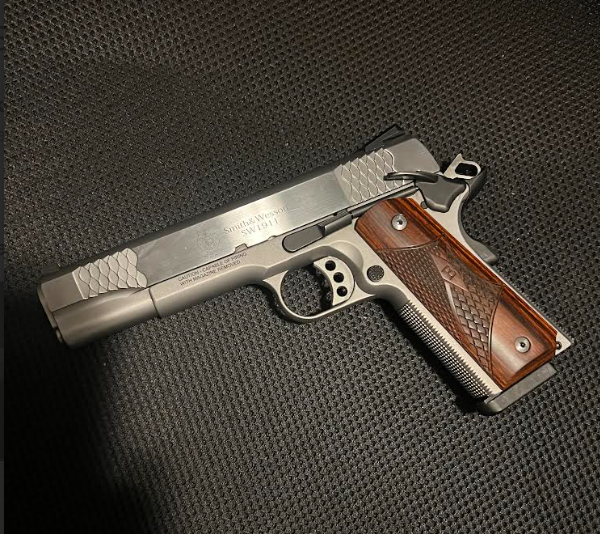
Anyone would be proud to own this Smith & Wesson E-series 1911. The fit and finish of the gun is near immaculate.
Higher-end 1911s tend to inspire pride of ownership. They feel like heirlooms, even when they are bought new. A Colt carries history since Colt was the original manufacturer of 1911s. A Smith and Wesson E-series carries a combination of an old school design with modern craftsmanship. These pistols often get cleaned carefully, stored thoughtfully, and talked about fondly with friends around the campfire or dinner table.
Budget 1911s (like the Armscor-produced brands) inspire a different kind of affection. They feel more approachable and less intimidating. They invite experimentation. Owners are far more likely to modify them, carry them hard, or loan them to friends without feeling any anxiety.
Neither emotion is better. They simply reflect different relationships between shooter and gun.
But Remember: Value Is Not the Same as Price
One of the biggest mistakes in this debate is confusing value with cost.
A budget 1911 like the Taylor’s offers tremendous value for shooters who want to experience the platform without financial strain. It delivers the core 1911 experience and leaves room for ammunition, training, and upgrades.
Higher-end 1911s justify their price through refinement, consistency, and long-term satisfaction. They cost more up front but often cost less emotionally over time because they rarely leave owners wondering “what if.”
Value depends entirely on expectations.
Who Each Category Is Really For
Budget 1911s shine for newer shooters, tinkerers, and those who want a hardworking pistol without emotional baggage. They are honest tools that perform well when they are understood and respected.
Higher-end 1911s suit shooters who appreciate detail, tradition, and mechanical harmony. They reward experience and attention. They feel complete from day one.
Many shooters eventually own both, and then they often discover that each fills a different role rather than replacing the other.
Final Thoughts
The budget versus higher-end 1911 debate misses the point when it turns into absolutes. There is no single correct answer but only better matches for different people.
The Taylor’s Armscor-made 1911 proves that affordability does not erase character. The Colt Series 70 shows why some designs become benchmarks rather than relics. And the Smith and Wesson E-series demonstrates how modern manufacturing can respect tradition without copying it blindly. The 1911 you keep back home in the gun safe or desk drawer has its own story to tell as well.
All three are real 1911s. All three can be trusted. The difference lies not in what they are, but in how they make their owners feel over time.
And in the 1911 world, that feeling matters almost as much as the shot that’s placed on target!