I have been thinking about the question posed in the title a lot lately, mostly because I keep seeing these guns show up at my local gun shop for prices that make me do a double-take.
We are talking about the old metal-framed Smith & Wesson semi-automatic pistols…you know, the ones with the four-digit model numbers that your dad’s police department probably carried in the 1990s!
The 4506. The 3913. The 5906. The 3906. The entire Third Generation lineup that Smith & Wesson made from the late 1980s through the mid-2000s before they pivoted hard into polymer and the M&P series took over.
These guns are not being made anymore, which is a shame in some ways and an opportunity in others. Because here’s the thing: they are still excellent semi-automatic pistols, they can be found in good shape on the used market for surprisingly reasonable money, and they also offer something that is getting harder to find in new production guns (in the form of a proper DA/SA trigger in a metal frame that does not cost what a Sig P226 or a Beretta 92 costs).
So are they still relevant? I think so, and I will tell you why.
What We Are Actually Talking About Here
When I say “old school Smith & Wesson semi-autos,” I am specifically talking about the Third Generation pistols.
These are the metal-framed, double-action/single-action guns that Smith started producing in the late 1980s after they figured out that the Second Generation guns had some issues that needed sorting.
The model numbers tell you most of what you need to know. Smith made dozens of variations across 9mm, .40 S&W, .45 ACP, and even 10mm. Some had traditional double-action triggers. Some were double-action-only. Some had frame-mounted safeties, others had slide-mounted safeties, and some had no manual safety at all beyond the decocker.
It was honestly kind of a confusing lineup even when these guns were new, which probably did not help their commercial success. But the core design was solid, and that is what matters now.
My Experience With These Guns
I have owned three of these Smith & Wesson Third Generation pistols over the years, and they have all left positive impressions despite their quirks.
Smith & Wesson 4506
The first was a Smith & Wesson 4506 in .45 ACP. This was a full-size duty gun, all stainless steel, built like a tank, and heavy enough that recoil was surprisingly mild for a .45.

The Smith & Wesson 4506 was a full-sized duty pistol in .45 ACP. It’s a great alternative to the 1911 or SIG Sauer P220 even if it’s no longer in production (like the other 3rd generation semi-autos).
The trigger was not amazing (typical DA/SA with a long, heavy double-action pull and a decent single-action) but it was predictable and the gun ran reliably with everything I fed it.
What I remember most about the 4506 was how substantial it felt. This was not a lightweight carry gun. This was a serious defensive pistol that felt like it could double as a hammer if you ran out of ammunition. The sights were adequate, the ergonomics were good for a gun from that era, and it just worked.
I eventually sold it because I was not shooting .45 ACP much at the time and I chose to stick with 1911s, but I have regretted that decision more than once.
Smith & Wesson 3913
The second was a Smith & Wesson 3913, which is the compact 9mm version with a 3.5-inch barrel and single-stack magazine. This was Smith’s answer to people who wanted a smaller CCW gun but who also still wanted the DA/SA manual of arms in a metal frame.
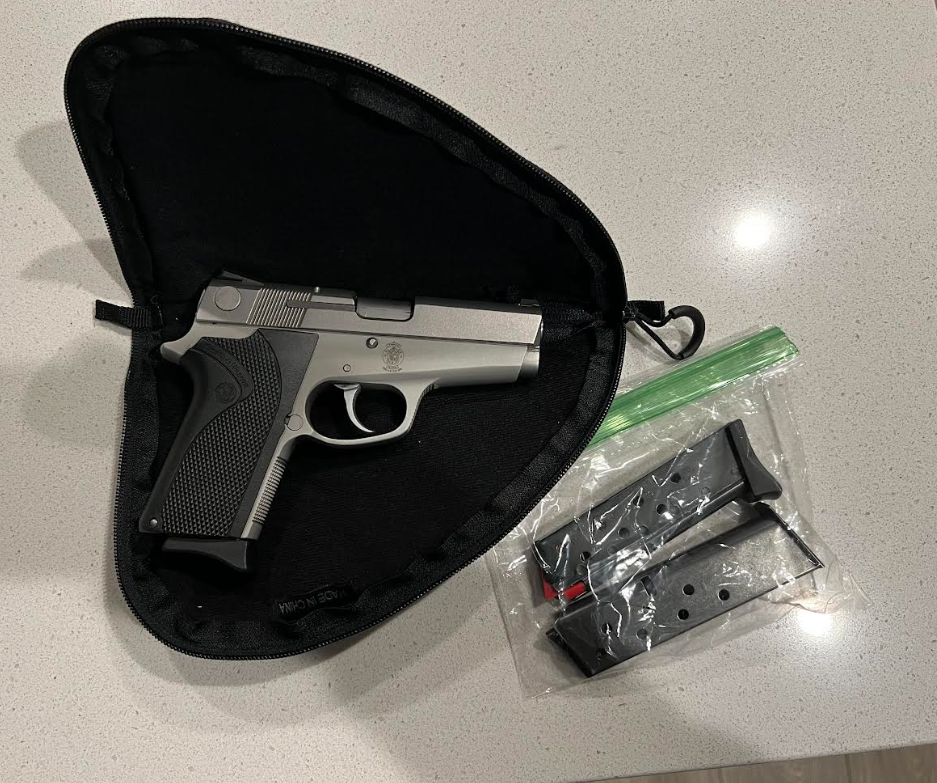
The Smith & Wesson 3913 is a compact 9mm pistol with an 8-shot single-stack magazine. It was a great choice for concealed carry back in the day and remains viable today.
The 3913 was genuinely pleasant to shoot. The single-stack grip was slim and fit my hand well. The recoil was manageable. The trigger was similar to the 4506 (so a long DA pull, better SA pull) but it worked.
I carried this gun for a while and appreciated how it balanced size with shootability. The capacity was limited at 8+1, which is nothing special now, but the gun was also reliable and accurate enough for its intended role.
I sold it years ago when I was consolidating my collection, and like the 4506, I have thought about buying another one more than once.
Smith & Wesson 909
The third was a Smith & Wesson 909, which is the budget model from this lineup. The 909 was Smith’s attempt at making an affordable law enforcement pistol for folks with tight budgets. It has a painted carbon steel slide instead of stainless and the finish was a lot more dull and thin too.
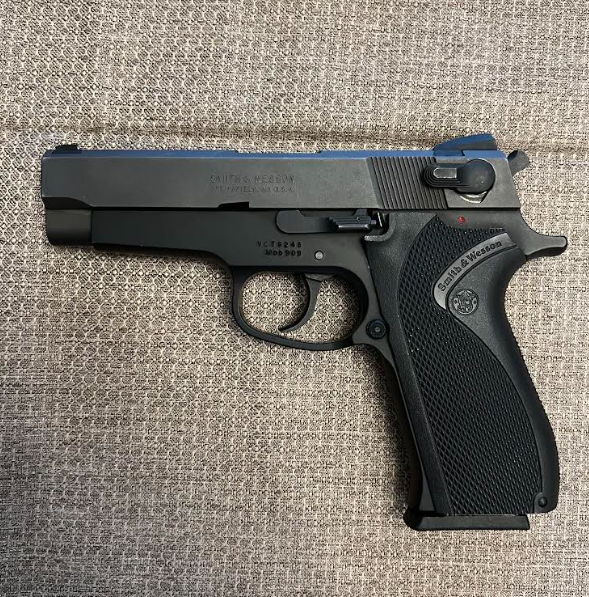
The Model 909 was a budget offering from Smith & Wesson. It’s a full-sized duty gun with a thin grip due to the single stack 9-round magazine.
But here is the thing: it still shot fine. The trigger was a typical Third Generation S&W, the reliability was there, and it felt like a real gun rather than a cheap substitute. I bought mine used for less than $400, shot it a fair amount, and eventually traded it toward something else.
But I never had a problem with it, and for the money, it was fine!
Why These Guns Work in 2026
So why would someone want one of these old Smith & Wesson semi-autos in 2026 when there are so many modern options available?
A few reasons, actually.
They are affordable. You can find these guns used in good condition for $300 to $500 depending on the model and local market. That is significantly less than a new Sig P226, Beretta 92, or CZ 75. If you want a metal-framed DA/SA pistol and do not want to spend $600 to $900, these Smith & Wessons offer serious value.
They are well-made. Smith & Wesson built these guns properly for duty purposes. The Third Generation pistols were designed for law enforcement use, and they were built to handle hard use and high round counts. The internal parts are robust, the tolerances are reasonable, and these guns were made in an era when American gun manufacturing still prioritized durability over maximum profit margins.
They offer also something a little unique. In a market dominated by striker-fired polymer guns, these old Smiths feel different. The weight helps with recoil. The DA/SA trigger gives you a long first pull for safety and lighter follow-up shots. The metal frame and traditional design have a certain appeal for people who appreciate older guns.
Parts and support still exist. Smith & Wesson may not be making these guns anymore, but parts are still available through various sources. Gunsmiths who worked on these guns during their heyday are still around. Magazines can be found, though they are getting more expensive. Holsters exist too, and especially for the more popular models like the 5906 and 4006.
The Alternatives and Why These Still Matter
If you want a DA/SA metal-framed pistol today, you have a few main options.
You can buy a CZ 75 or one of its many variants, which are excellent guns and arguably the best value in this category for new production.
You can buy a SIG P-series like the P226 or P229, which are outstanding pistols (I have the P229 in the form of the M11-A1) but expensive.
You can buy a Beretta 92 or M9 (another pistol I own and love), which is a classic design with a strong following.
All of those are great choices, and I am not here to argue against them.
But if you are on a budget, or if you want something a little less common, or if you just appreciate the idea of buying a well-made American gun from an era when Smith & Wesson was building these pistols for serious duty use, the Third Generation Smiths deserve consideration.
They are not perfect. The triggers are not as refined as a tuned CZ or a high-end Sig. The capacity is lower than modern double-stack 9mms. The ergonomics reflect 1980s and 1990s design thinking, which means they do not have aggressive texturing or modern grip angles.
But they work. They are reliable. They are affordable.
And they are available right now on the used market in quantities that will not last forever.
What to Look For If You Want One
If you are thinking about buying one of these old Smith & Wesson semi-autos, here is what I would suggest based on my experience.
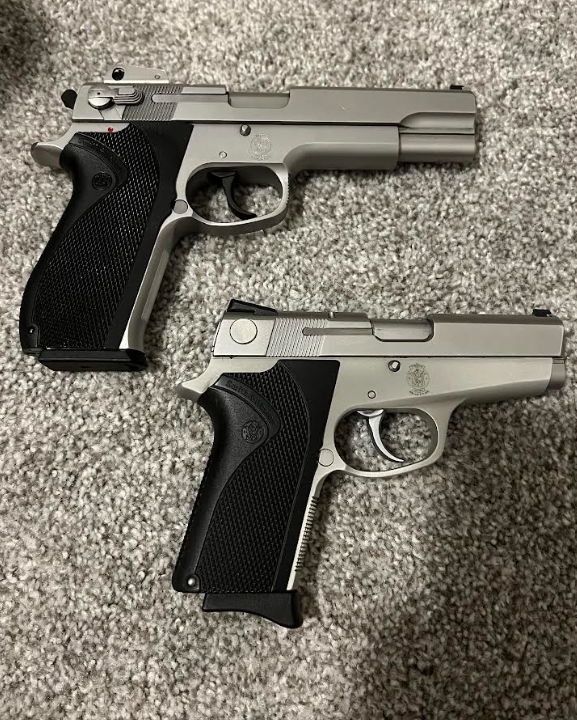
Here the 4506 and the 3913 are set together side-by-side. The 4506 is a good gun to have on your hip when you go for a hike in the woods or to keep on your nightstand at home; the 3913 makes for a great CCW piece or as a back-up to the 4506.
Check the finish carefully. The stainless models hold up better than the ‘painted’ carbon steel models like the 909. Look for pitting, rust, or finish wear that suggests poor storage or lack of maintenance.
Test the trigger and action. Rack the slide, dry fire it (safely, obviously), and make sure the double-action and single-action pulls feel consistent. The trigger should be heavy but smooth in DA mode and lighter with a clean break in SA mode.
Check for magazine availability. Some models have magazines that are still easy to find (like the 5906). Others are getting scarce and expensive. Before you buy, check online to see what magazines cost and whether they are available.
Shoot it before you commit if possible. If you can rent or borrow the model you are considering, do it. These guns feel different from modern pistols, and the weight and trigger take some adjustment. Make sure you actually like shooting it before you buy.
Avoid oddball calibers. Stick with 9mm, .40 S&W, or .45 ACP. The 10mm and .356 TSW models are cool but ammunition and parts are harder to find.
Are These Guns Still Relevant?
Yes. They absolutely are.
These guns are not going to replace your Glock 19 or whatever modern pistol you carry daily. They are not going to win any competitions against tuned CZ Shadow 2s. They are not going to be the gun you recommend to someone buying their very first pistol who has no experience.
But for someone who appreciates solid craftsmanship, wants a DA/SA metal-framed pistol without spending Sig or Beretta money, or just enjoys shooting older guns that still work, these Smith & Wesson Third Generation pistols are absolutely still relevant in 2026.