Shooting Range Drills (indoor)
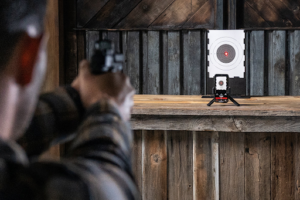
From my dozens of paid shooting classes I’ve distilled some shooting range drills you can do at the indoor range into a handy list you can take with you. Combine with the outdoor range drills for a comprehensive list. Indoor shooting range drills list Outdoor Shooting Range Drills Explanations Clear Checkpoints In a stressful situation we get tunnel vision. This is an instinctive response to help you focus on that bear trying to eat you. But in a gunfight tunnel vision is counterproductive. To fix this, once your target is neutralized, do not holster your weapon. First, look fully left, then look fully right. If no additional targets, and your prior target remains neutralized, reload, then holster your weapon. This ensures there are no additional targets you did not see. It also helps you clear your tunnel vision. Accuracy at Different Ranges How much time you take to aim should
Best Options For Keeping a Gun in the Home for an Emergency
When seconds count in an emergency home defense scenario, the last thing anyone wants is to be fumbling with their keys or digging around through a closet or trying to remember which drawer the “good flashlight” is in. And that’s exactly why having a firearm in your home for emergencies is all about readiness. But it also has to be done safely and without turning your living room into a scene from a prepper documentary. The good news? There are plenty of straightforward options available to you that you can use to keep your gun close at hand in the home and without sacrificing security or your peace of mind. Let’s talk fast access, smart storage, and emergency preparedness—with a healthy dose of common sense. What “Accessible” Really Means in an Emergency Before we get into safes and secret compartments and all that, it would probably help to get a
Shoulder Holsters for Concealed Carry: Practical or Problematic?
When shoulder holsters come to mind, it’s likely that most folks conjure up images of old-school detectives and TV cops. There’s no question that there’s something undeniably appealing about shoulder holsters. They’re rugged, practical, and retro. And yes, they’re cool. But when it comes to concealed carry in the modern day…cool isn’t exactly everything. So the real question is: do shoulder holsters still earn their keep, or have they gone the way of the pager? The truth is that shoulder holsters are still around for a reason. They offer some serious perks, and especially for the right person who is in the right setting. But like any piece of firearms-related gear, shoulder holsters come with trade-offs too. Let’s unpack what makes them practical, what makes them problematic, and why they’re not nearly as outdated as you might think. The Perks of Shoulder Carry Here are the main advantages of using
Colonel Jeff Cooper’s color codes
Always stay alert. Staying alert gives you more time to react to threats. Time is life.
Firearm safety follows training
For decades, the debate over gun ownership has sparked intense conversations in political, social, and household settings. Advocates on both sides are passionate, and both claim to value safety above all else. But contrary to popular anti-gun rhetoric, being surrounded by guns, responsibly owned and used, can actually make individuals and communities safer, not more vulnerable. It’s time we reexamine the narrative and understand why embracing the presence of firearms, rather than banning them, offers significant benefits in terms of personal security, crime deterrence, and even national resilience. The Importance of Training and Education Being surrounded by guns only makes a person safer if paired with training and education. Just like driving a car or operating heavy machinery, handling firearms requires responsibility. Luckily, millions of Americans understand this. Organizations like the National Rifle Association (NRA) and USCCA (U.S. Concealed Carry Association) offer countless training programs, safety courses, and certifications. These
Gun Safety for Kids: Teaching Responsibility Without Fear
Firearms are a reality in millions of American households, serving purposes like self-defense, recreation, and hunting. However, with the right education and proactive safety measures, we can equip children to grow up knowledgeable, responsible, and secure, without instilling fear or risking accidents. This post is not about the political aspects of gun ownership. It aims to address a common concern: keeping our kids safe. Regardless of whether you own firearms, there’s a possibility your child may come across one at a friend’s place, in the wilderness, or even in an overlooked drawer. Understanding what actions to take—and what to avoid—can ultimately save lives. Read more on gun safety for kids. Why Gun Safety for Kids Matters Each year in the United States, countless unintentional shootings by children result in fatalities and injuries. A 2023 report from Everytown for Gun Safety indicates there were over 350 such incidents that year, leading
5 Dry Fire Myths Debunked
Dry Firing is a hot topic amongst firearm enthusiasts, seasoned shooters, and new gun owners. There are many opinions, a lot of confusion, and persistent myths surrounding the topic. You have probably asked the question, “Does dry firing damage your firearm?” This question can’t really be answered with a simple yes or no because it truly depends on the firearm. In this article, we’ll break down the myths, explore the mechanics behind dry firing, and help you understand which firearms are safe to dry fire—and which aren’t. Let’s set the record straight. What is Dry Firing and Why do People Worry About it In simple terms, dry firing is the act of pulling the trigger and firing a firearm without live ammunition in the chamber. Its commonly used purposes include: Dry firing is both cost-effective and low maintenance, and great for practicing your shooting skills on a budget. What’s the
How Important is Feedback in Your Firearm Training: Human Feedback
Pulling the trigger is just the beginning, growth happens through feedback. Through this, we will explore why immediate and accurate human feedback is necessary to develop critical shooting skills. Laser Training Systems, like Interactive Gun Range, offers various tools for self-reflection, but that does not replace the nuanced insights provided by experienced instructors and peers. A shooter can accelerate progress, eliminate bad habits, and build confidence through structured feedback in dry fire and live fire practice. Understanding What Human Feedback Is The observations, critiques, and guidance that are offered by instructors, coaches, and fellow shooters during training sessions are critical parts of the human feedback process. This type of feedback provides personalized insights that aid in the correction of technical execution and mental preparedness, unlike its counterpart, automated feedback provided by technology. A qualified instructor can notice subtle errors in your body mechanics that no sensor will pick up, like
How Often Do Professionals Dry Fire: Expert Tips For Consistent Training
Professionals Dry Fire Frequency is often, it is a part of their daily routine. Mastery is built on Dry Fire Training. Dry Fire Training is the act of practicing firearm shooting without live ammunition. Dry Fire Practice gives a shooter the opportunity to work on important skills. This is a practice that the pros do 4-5 times a week in varying session lengths. Dry Fire Practice should become a part of a shooter’s training routine to enhance their skill level. Introduction Dry Fire Training is a powerful and overlooked tool in building proficiency with firearms. Dry fire training is a foundational practice used by the top professionals. Competitive shooters, law enforcement, military, and civilian shooters all use dry fire training because of its high volume, low-cost repetition. This is how muscle memory is built, and fundamentals are reinforced all without using expensive ammo and paying for range time. What is
Advantages of Live Fire Training Over Dry Fire Training: Why Real Ammunition Matters
Let’s explore the advantages of live fire training compared to dry fire training. While dry fire training is beneficial for improving trigger control and familiarizing oneself with a weapon, without incurring the costs of ammunition and range fees, it lacks the realism that live fire offers. This article will highlight how live fire training improves recoil management, simulates real-world conditions, and ensures the proper functioning of your firearm. Understanding Dry Fire vs. Live Fire Training and Their Benefits and Limitations Dry Fire and Live Fire training each have their unique benefits and significant differences. Drawbacks of Dry Fire Training 1 While dry fire training offers various benefits, it’s important to acknowledge its drawbacks as well. Here are a couple of notable limitations: Although dry fire training has its limitations, combining it with live fire training can create a powerful training regimen. Key Advantages of Live Fire Training Over Dry Fire
Dry Fire Laser Training Cartridge
A Dry Fire Laser Training Cartridge is a tool designed for firearms training without traditional live ammunition. These cartridges are particularly useful for indoor and at-home practice, eliminating the need to visit an outdoor shooting range. They operate on small watch batteries and are activated when the firing pin strikes the back of the cartridge, producing a laser light upon firing. The Laser Training Cartridge is shaped like a real bullet and is specific to a certain caliber, so it’s important to ensure that you purchase the correct caliber for your firearm. Benefits of Dry Fire Laser Training Cartridges A Dry Fire Laser Training Cartridge is an excellent tool for improving shooting skills. It allows you to practice at home, helping you build overall accuracy through repeated exercises. Additionally, you can safely practice your draw from the holster or concealment without the risk of accidents. One of the significant advantages
You Need to Dry Fire Practice Every Day
In a self-defense scenario you probably are not going to start out with weapon in hand, with a confirmed round in the chamber, safety off, standing in your favorite shooting stance. You can improve the chances of that with good situational awareness. But sometimes you just start in a bad situation. On the asphalt of the grocery store, after just been struck in the back of the head head. At knifepoint. Surrounded. When under stress, our minds operate at a diminished capacity. It’s easy to come up with a plan for these situations at home. Not so easy in the moment, unsure if you were attacked or if you were hit by accident, unsure if the law allows you to shoot or not, knowing you are facing jail if you guess wrong. Under stress we revert to our training, and only through training can we perform well in a self-defense