I own both metal-framed and polymer-framed pistols, and I shoot both regularly.
This is not going to be one of those articles where I tell you that polymer guns are garbage or that metal guns are the only real choice. Both categories have their place, and both work fine for their intended purposes.
But I do think metal-framed semi-auto pistols offer some genuine advantages that often get overlooked in today’s market, where polymer guns dominate the conversation and the gun counter.
And I think those advantages are worth talking about…and especially so for shooters who are trying to decide what works best for them.
Weight and Recoil Management
This is the big one, and it’s not just marketing talk or old-timer nostalgia. Weight matters when you are shooting a pistol, and metal frames provide weight that polymer frames simply cannot match without adding external weights or other modifications.
I have shot thousands of rounds through polymer guns like my brother’s Glock 19, a Walther PPQ I used to own, and a Taurus G2C that I was pleasantly surprised by. All of them are fine guns. All of them go bang reliably. But all of them feel snappier than comparable metal-framed pistols shooting the same ammunition.
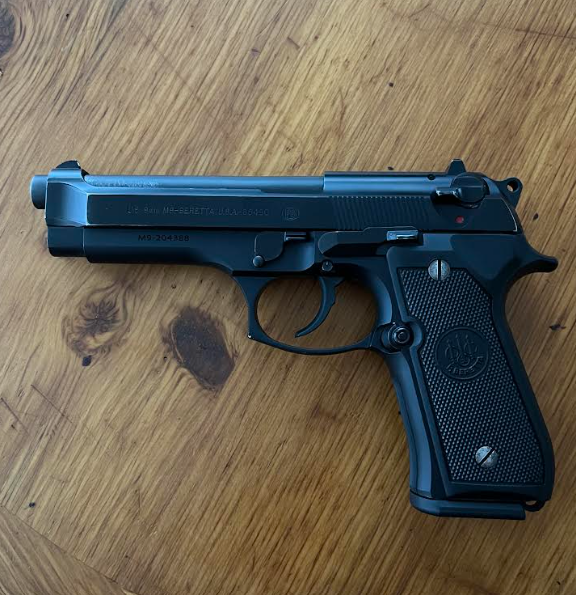
The metal-framed Beretta M9 is one of my favorite pistols. The extra weight from the metal really helps to tame recoil and create a smoother shooting experience.
Compare that to shooting my Beretta M9 or my SIG Sauer M11-A1. The extra weight of those metal frames soaks up recoil in such a way that makes follow-up shots faster and more controlled. The muzzle rise is less dramatic. The gun settles back on target quicker. The whole shooting experience feels smoother and less jarring.
This matters most when you are shooting a lot of rounds in one session or when you are trying to shoot quickly and accurately. A polymer gun will wear on you faster over a 200-round range session. A metal gun will still feel manageable by the end of that session because the weight is doing some of the work for you.
I am not saying polymer guns are uncontrollable or that you cannot shoot them well. Obviously millions of people do exactly that every day. But if we are being honest about the physics involved, a heavier gun will always manage recoil better than a lighter gun shooting the same cartridge.
That’s just how it works.
Durability and Longevity
Polymer frames are durable. I am not going to pretend they are not. Modern polymer pistols can handle tens of thousands of rounds without the frame failing, and companies like Glock have proven that polymer frames can withstand serious abuse and keep functioning.
But metal frames are durable in a different way. They do not wear the same way polymer does. They do not develop the same kind of stress cracks or frame flex issues that high-round-count polymer guns sometimes show.
And most importantly, when a metal frame does get damaged, it can often be repaired by a competent gunsmith. A cracked polymer frame is usually the end of the gun.
I have seen Glocks with frames that show visible wear around the rails and locking block area after serious use. I have seen polymer frames with hairline cracks near stress points. I have seen frames that developed flex issues that affected reliability.
None of these are common problems, and most shooters will never put enough rounds through their guns to encounter them, but they do happen.
Shooting Feel and Feedback
This is more subjective, but it matters to a lot of shooters including me. Metal-framed guns feel different when you shoot them. The weight, the balance, the way they sit in your hand, the feedback you get through the frame during recoil…all of it is different from polymer guns.
Some people prefer the lighter and more nimble feel of polymer pistols. That’s completely valid. But I prefer the substantial and more planted feeling I get from a metal gun. When I am shooting my Beretta 92, I feel connected to the gun in a way that I do not quite get with my Glock. That’s because the weight just gives me something to work with, something to control in other words. The gun feels like an extension of my hand rather than just a tool I am holding.
This probably sounds like romantic nonsense to some people, and maybe it is. But I know I shoot metal-framed guns better than I shoot polymer guns, and part of that is just how they feel during the shooting process. The feedback is different, the balance is different, and my brain apparently likes that better.
I also think metal frames dampen vibration better than polymer. When you shoot a polymer gun, you feel more of the high-frequency vibration that comes with each shot.
With a metal gun, that vibration gets absorbed and dissipated through the frame material in a way that feels smoother and less harsh.
Accuracy Potential
Here is where things get controversial, because plenty of people will tell you that polymer guns are just as accurate as metal guns…and honestly, in terms of mechanical accuracy from a rest, they are probably right.
But I shoot metal-framed guns more accurately than I shoot polymer guns, and I do not think I am alone in that. Part of it is the recoil management we already talked about. Part of it is the weight helping me hold steadier. Part of it might just be psychological preference.
I have shot both my Beretta 92 and my Glock 19 at 25 yards many times, and I consistently get tighter groups with the Beretta. Same ammunition, same day, same conditions. The Beretta just works better for me at distance.
I had a similar experience comparing a Walther PDP to a SIG P229 (the M11-A1). The PDP is an excellent polymer gun with a fantastic trigger, but I shot the Sig better despite the PDP’s supposedly superior ergonomics and trigger. The weight and feel of the SIG just worked better for my shooting style.
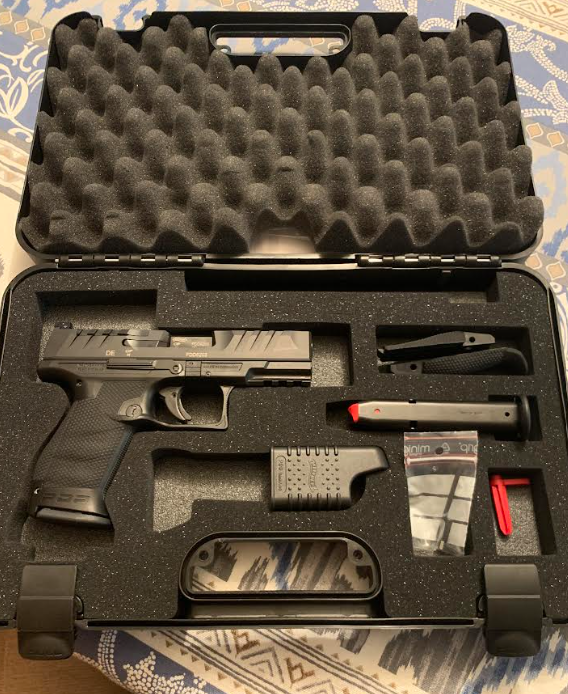
Polymer-framed guns like this Walther PDP are lighter and easier to carry but also have somewhat of a higher muzzle flip.
I am not claiming this as a universal truth by any stretch of the imagination either. I know competition shooters who shoot polymer guns at an elite level. And I also know people who cannot shoot a heavy metal gun to save their life but are laser-accurate with a Glock. Guns are personal, and what works for one person does not work for everyone.
But for me and for many shooters I know, metal frames just provide an accuracy advantage that is real and measurable on the range.
The Downsides We Should Acknowledge
I would be lying if I said metal-framed guns were superior in every way…because they are not. They have real disadvantages compared to polymer guns, and pretending otherwise would be dishonest.
Weight is a double-edged sword. Yes, it helps with recoil. But it also makes the gun heavier to carry all day. The Smith & Wesson 3913 I owned before is a compact 9mm, but it weighs noticeably more than a Glock 26 or Taurus G2C. If you are going to be carrying concealed for 12 hours a day, that weight matters.
Capacity is often lower. Many classic metal-framed designs like the Sig P-series or the 1911 have lower capacity than modern polymer guns. A Glock 17 holds 17+1. A Beretta 92 holds 15+1 or 17+1 or 18+1 depending on the magazine. A SIG P226 holds 15+1 or 18+1 as well. Not a huge difference, but it exists.
And single-stack metal guns like the 3913 or a 1911 are significantly lower capacity than modern double-stack polymer guns.
Cost is usually higher. A new Beretta 92 or SIG P226 costs significantly more than a Glock 19 and especially more so than a Taurus G2C. If you are on a budget, polymer guns offer better value in terms of price-to-performance ratio. Metal guns are often more expensive to manufacture, and that cost gets passed to the consumer.
Corrosion resistance varies. Polymer does not rust. Metal can, and especially if you live in a humid climate or carry the gun against your body where sweat becomes a factor. Stainless steel and hard-coat finishes help, but they are not magic. Metal guns require more maintenance to prevent corrosion than polymer guns do.
Where Metal Frames Make the Most Sense
So when does it actually make sense to choose a metal-framed pistol over a polymer one?
For range guns and home defense. If the gun is not going to be carried daily and weight is not a critical factor, metal frames offer real advantages in shootability and recoil management. My Beretta M9 is my go-to range gun and my home defense pistol because I shoot it well and the weight does not matter for those roles. The SIG M11-A1 is a gun I like to carry with me because it’s got that metal frame but in a more compact package.
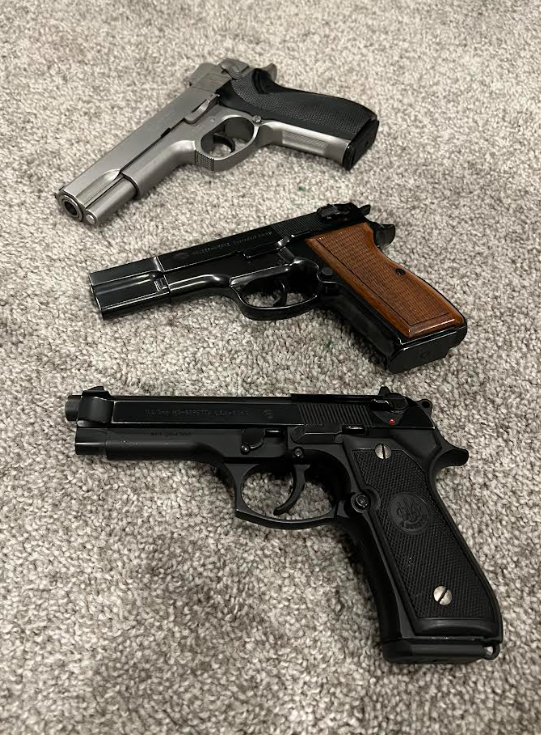
A collection of three metal-framed pistols: the Smith & Wesson 4506 in .45 ACP, the Mauser 90DA in 9mm, and the Beretta M9 in 9mm.
For shooters who prioritize accuracy and feel over weight. If you are more concerned with how well you shoot the gun than how light it is, metal frames often provide an edge. I shoot better with metal guns, so I choose them when performance matters more than portability.
For people who shoot a lot. If you are putting 500+ rounds downrange in a training session, metal frames will be more comfortable and less fatiguing than polymer. The recoil management makes a real difference over volume.
My Personal Take
Both categories have their place in my collection, and I do not think one is objectively better than the other. They are different tools for different purposes, and the right choice depends on what you value and what you are trying to accomplish.
But I do think metal-framed pistols offer rea and tangible advantages that get overlooked in today’s polymer-dominated market. They are not obsolete. They are not outdated. They are just different, and for certain applications and certain shooters, they are still the better choice.